
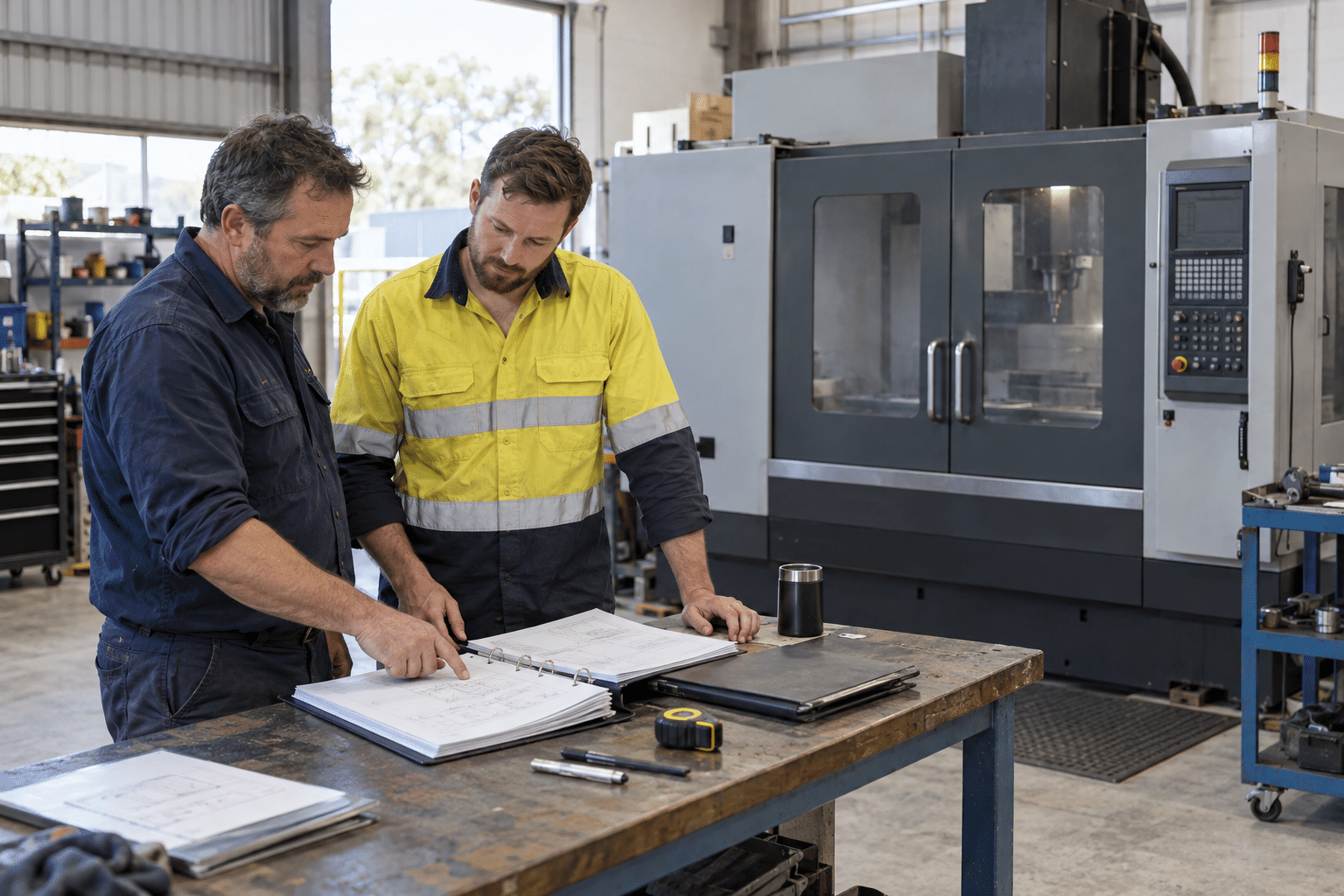
A second-hand machine can look like a practical way to expand a workshop. The purchase price is clear, the seller says it runs well and the delivery company has a space next week. What is less obvious is whether the machine suits your premises and what will be needed before it can operate safely.
Speaking with an industrial electrician in Brisbane before committing to the purchase can help you identify questions while there is still time to act on the answers. The aim is to understand the electrical scope alongside the machine’s condition, installation requirements and production role—not simply to arrange a connection after delivery.
Define the job the machine needs to do
Start with its intended use. Record the materials or products it will handle, expected operating hours and where it fits into your workflow. Explain whether it replaces existing equipment or adds another load while the rest of the workshop continues operating.
Include supporting equipment such as extraction, cooling, compressed air or material-handling systems. These may involve separate suppliers, but they affect the overall plan. A machine that fits physically can still create problems if the surrounding process has not been considered.
Share a simple layout showing the proposed location, access routes and nearby equipment. It gives your electrician and other contractors a common starting point without asking them to guess how the workshop will operate.
Request the machine’s records before the sale
Ask the seller for the make, model, serial number, manuals, electrical drawings and available maintenance history. Request clear photographs of accessible identification plates and external controls. Do not remove covers or enter an electrical enclosure to obtain information.
Find out whether the machine has been modified, repaired or placed in storage. Ask what is included in the sale, particularly separate control cabinets, leads, accessories and documentation. Missing items can change the scope of an installation even when the main machine appears complete.
Keep seller statements separate from verified findings. “It was working when disconnected” may be useful history, but it does not establish its current condition or suitability for your site. An assessment should identify what can be checked and what remains unknown.
Have the electrical requirements reviewed
Give the technical information to a licensed electrical contractor before assuming the existing supply will suit. The review may need to consider voltage, phases, operating demand, starting characteristics, protection and the condition of the intended circuit and switchboard.
Those requirements cannot be settled by comparing the shape of a plug or finding an unused outlet. Nor should a seller’s suggested adapter become the installation plan. The machine, its controls and the building supply need to be considered together by the appropriate specialists.
MAC Electrical’s industrial electrical services include installation, maintenance and fault-finding support. Discuss the particular machine and site so the team can confirm the suitable scope and any manufacturer input required.
Treat used equipment condition as a separate question
A supply assessment and a machine condition assessment answer different questions. Your premises may have suitable capacity while the equipment still needs attention. Conversely, a serviceable machine may require changes at the premises before it can be installed.
Ask who will assess the electrical condition, machine guarding, controls and mechanical components, and which areas fall outside each contractor’s scope. More than one specialist may be needed. A general installation quote should not be mistaken for a comprehensive machinery assessment unless that work is expressly included.
If records are incomplete, discuss the implications before agreeing on a delivery date. Clear limitations allow you to make an informed purchase decision. They also prevent a later disagreement about whether an unexpected repair was supposed to be included.
Plan access and installation responsibilities
The delivery route, unloading position and final location should be agreed with the people handling the move. Keep the electrician involved when placement could affect cable routes, access to controls or the space needed for future maintenance.
Identify who is responsible for disconnection at the seller’s premises, transport, positioning, electrical work and commissioning. If the seller supplies an installer, clarify what that person will do and what your local contractor must provide. Record the handover points between them.
Avoid booking production against an assumed arrival-and-start date. Installation can depend on assessment findings, parts, other trades or access arrangements. A realistic programme includes time to resolve those issues before the machine is released for use.
Agree on safe access and commissioning
Electrical work belongs with appropriately licensed people. WorkSafe Queensland advises that work on or near energised electrical equipment is generally prohibited, with limited permitted circumstances. A production deadline is not a reason for an owner or operator to attempt electrical testing or connection.
Discuss the site’s isolation and access arrangements with your contractor. Other energy sources and moving components may require separate controls. Staff should know who is authorised to manage the work and when the area is unavailable.
Before use, agree on the required testing, manufacturer involvement and operational checks. Keep the machine out of production until the responsible people confirm the relevant work and handover are complete. This is a coordinated process, not a trial run organised because the delivery has arrived.
Compare the complete scope, not just the connection price
A useful quotation explains the information it relies on, the work included, exclusions and conditions that could alter the price or timing. Depending on the assessment, the scope may involve more than connecting the machine: supply work, documentation, repairs or further specialist review may be needed.
Ask how unforeseen findings will be reported and approved. Also confirm whether the quote includes commissioning attendance, coordination with the machine supplier and the records you will receive. These details make competing proposals easier to compare.
Keep purchase, transport and installation decisions linked. Finding a lower machine price is not necessarily helpful if missing documentation or unsuitable equipment prevents the machine doing the job you need.
Keep a useful handover file
After installation, keep the machine identification, manuals, relevant drawings, electrical records and maintenance recommendations together. Record who completed each part of the work and the contact details for future support.
Give operators the appropriate training and reporting process for problems. An unusual noise, repeated stoppage or damaged control should be reported through that process rather than worked around. Keep a record of faults and later modifications so future technicians are not starting without context.
Frequently asked questions
Can I buy the machine first and arrange electrical work later?
You can, but an early review may reveal requirements that affect the buying decision. Supplying the machine details and proposed location before purchase gives you more opportunity to resolve uncertainty.
Does a working demonstration prove the machine will suit our workshop?
No. A demonstration at another site does not establish the capacity, condition or arrangements at yours. Your installation and intended use still need to be assessed.
Can staff connect it if the plug appears to fit?
Do not use appearance as proof of suitability. Have the installation requirements confirmed and follow the contractor’s and manufacturer’s instructions. Staff must not attempt work that requires an electrical licence.
What should we send with an enquiry?
Send the make and model, accessible identification photos, available manuals, proposed location and intended use. Explain what other equipment will operate nearby and any delivery deadlines.
Discuss your machinery purchase with MAC Electrical
Before ordering used equipment for your Brisbane workshop, contact MAC Electrical on 0417 758 860. Share the machine information and site plan so the team can discuss assessment, installation scope and the next practical steps for your premises.
0 Comments